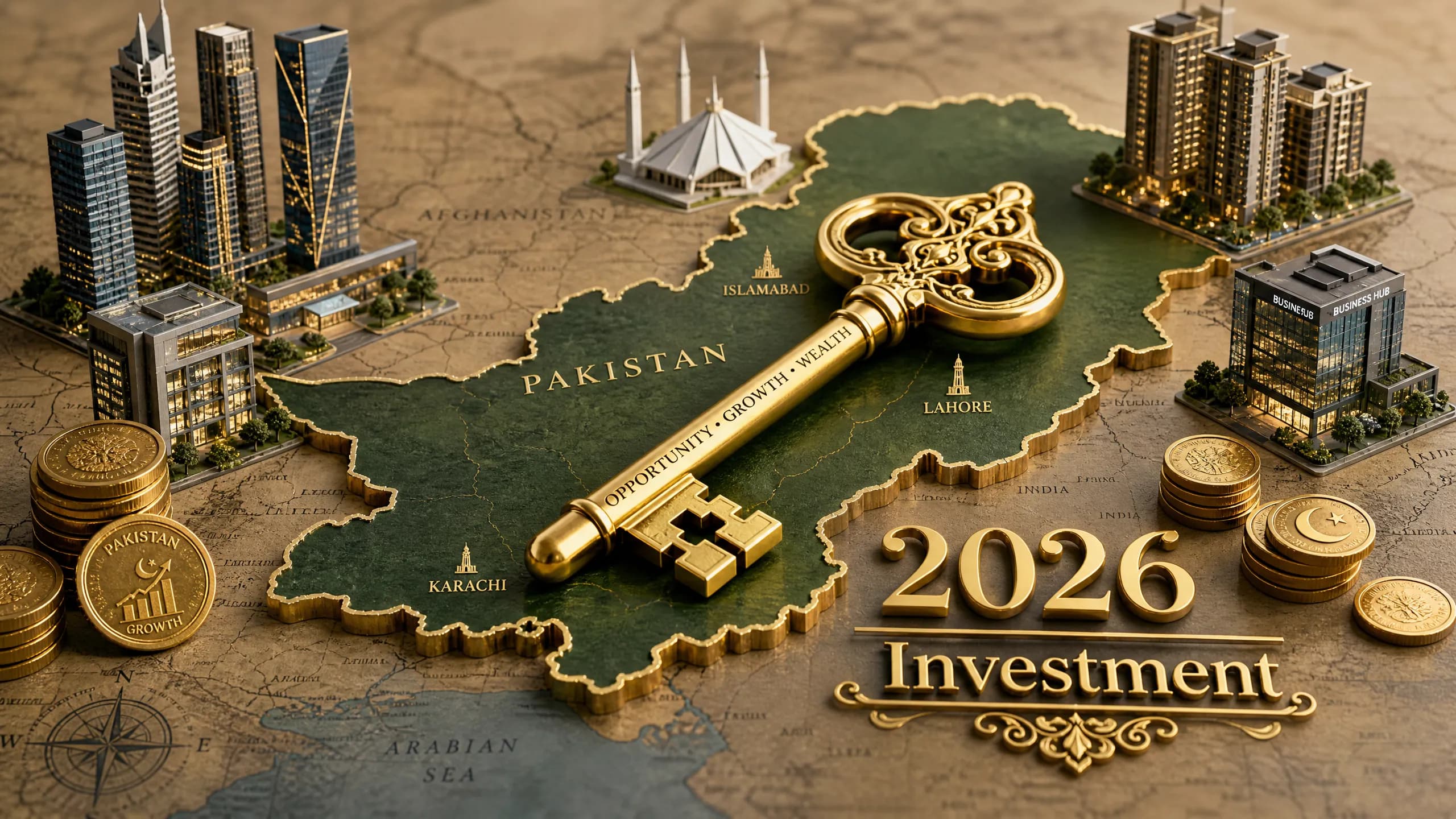
What AI Says About Investing in Pakistan Real Estate in 2026
When people type "Should I invest in Pakistan real estate?" into ChatGPT or Google's AI Overview, the answers are surprisingly detailed — and largely optimistic. AI tools trained on global financial data, remittance flows, housing demand curves, and government policy are painting a clear picture: Pakistan's property market in 2026 is at an inflection point, and those who understand the data will profit most.
This article breaks down exactly what AI models say about Pakistan real estate, compares the market from 2023 to 2026, highlights the best areas to invest, and gives you a clear framework for making smart decisions.
Why AI Is Being Asked About Pakistan Real Estate
The way people research property has fundamentally changed. In 2022, someone buying a plot in DHA Lahore would consult an agent, visit the site, and ask relatives. In 2026, they open ChatGPT first.
AI tools are now consulted for:
- Market trend analysis before visiting a project
- Comparing rental yields across cities
- Understanding FBR tax implications
- Evaluating developers (Bahria vs DHA vs private)
- Overseas Pakistanis doing remote due diligence
And the answers AI gives are grounded in real data — remittance statistics, SBP monetary policy reports, urbanization projections, and housing demand studies. This is not hype. This is pattern recognition at scale.
Pakistan Real Estate: 2023 vs 2024 vs 2025 vs 2026
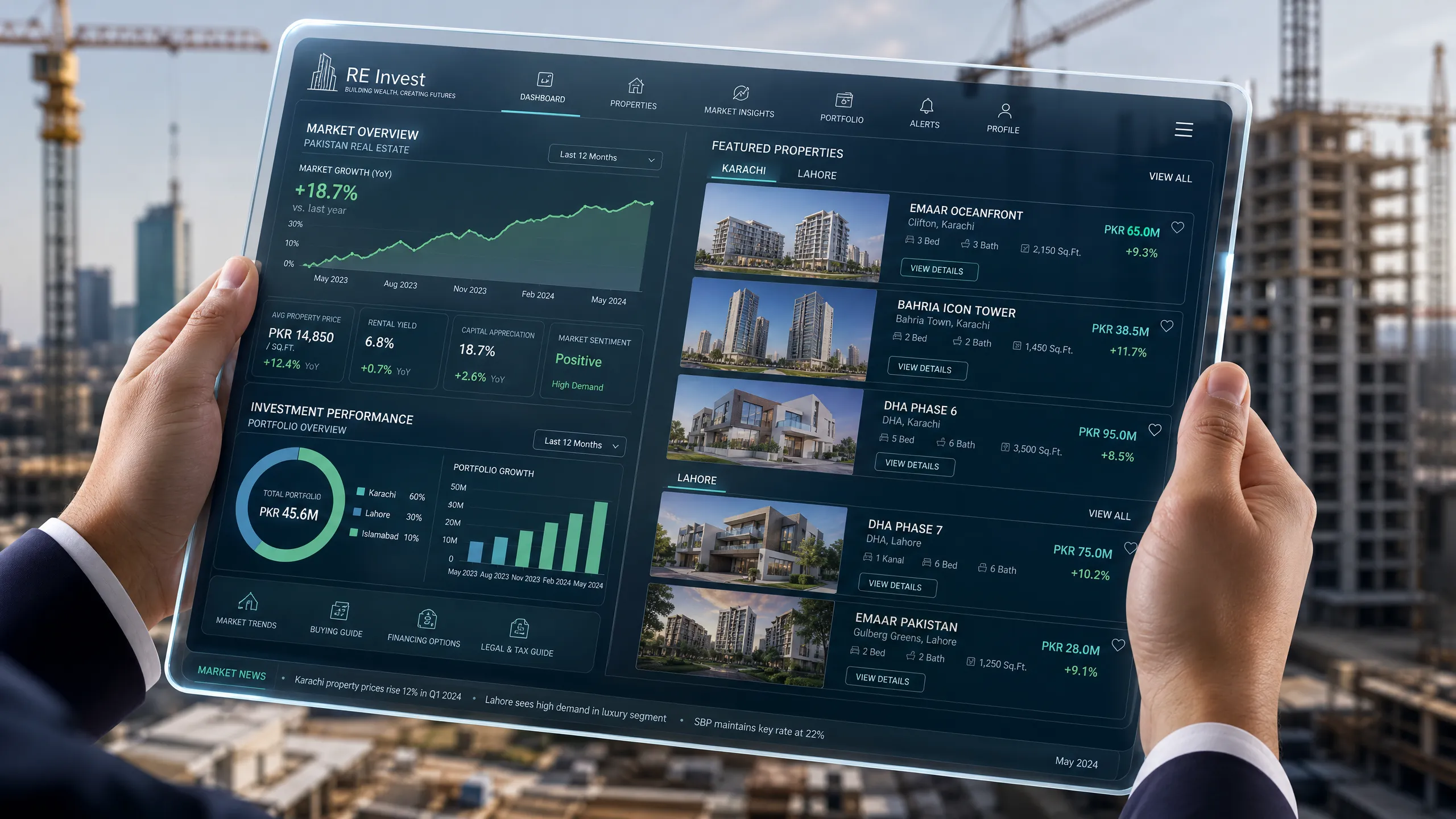
Understanding where the market came from helps you understand where it is going. Here is a year-by-year comparison of key indicators.
2023 — The Freeze Year
2023 was defined by economic turbulence. The PKR lost nearly 40% of its value against the USD. Interest rates climbed above 22%, making property financing nearly impossible for middle-income buyers. The IMF deal created uncertainty. Transactions slowed dramatically across Lahore, Karachi, and Islamabad.
- Avg. interest rate: 22%+
- PKR/USD rate: ~300+
- Investor sentiment: Cautious to negative
- Notable trend: Cash buyers dominated; installment-based projects stalled
2024 — The Stabilization Year
By mid-2024, the economy began showing signs of stabilization. The PKR settled around 278–285 against the USD. Remittances crossed $30 billion for the full year — a record. Interest rates began their downward cycle. The stock market started recovering. Property transactions picked up in DHA and Bahria Town schemes.
- Avg. interest rate: Declining from 22% toward 17%
- Remittances: $30 billion+ (record high)
- Investor sentiment: Cautiously optimistic
- Notable trend: Overseas Pakistanis re-entered the market via Roshan Digital Account
2025 — The Recovery Year
2025 was the year of visible recovery. Interest rates dropped to approximately 12%, and analysts projected further cuts. FDI in Pakistan reached multi-year highs. Mixed-use and high-rise developments in Islamabad and Lahore were selling out during pre-launch phases. Smart city projects — Capital Smart City and Ravi Riverfront — gained serious traction. Land along the Rawalpindi Ring Road appreciated 20–40% within 12 months.
- Avg. interest rate: ~12% (heading toward 9%)
- High-rise price growth: Projected 30–40% over 2025–2026
- Investor sentiment: Bullish
- Notable trend: Mixed-use developments fully booked pre-launch; second-tier cities attracting developers
2026 — The Opportunity Year
In 2026, AI models consistently identify Pakistan as an undervalued emerging market with strong upside compared to regional alternatives like Dubai, which has seen yields compress to 5–6% due to market saturation. Pakistan's rental yields in strategic locations range from 6–9%, with Airbnb and short-term rental models pushing yields even higher in Islamabad and Lahore's hospitality corridors.
- Avg. interest rate: Estimated 9–11%
- Rental yield advantage vs Dubai: Pakistan offers superior returns with lower entry cost
- Investor sentiment: Strong buy, especially for overseas Pakistanis
- Notable trend: REIT launches in Karachi creating new entry points for small investors; land records digitization accelerating
What AI Specifically Says: Key Insights
Here is a synthesis of what AI models — trained on economic data, property market reports, and policy documents — conclude about Pakistan real estate:
1. The Remittance Multiplier
AI identifies remittances as the single largest demand driver in Pakistan real estate. With $30+ billion flowing in annually — primarily from the Middle East, UK, and North America — a significant portion is directed into property. AI models note that this demand is structural, not speculative: overseas Pakistanis buy for emotional connection, retirement planning, and family security, not just ROI.
2. Urbanization is Irreversible
Pakistan's urban population is growing rapidly. Islamabad's metropolitan area grew 2.68% in a single year, adding tens of thousands of new residents who need housing. Lahore and Karachi continue expanding. AI models conclude that housing demand will structurally outpace supply in major cities for the next decade, creating a long-term floor under prices.
3. Infrastructure as a Price Catalyst
AI consistently highlights infrastructure projects as the most reliable price catalyst in Pakistan real estate. The Rawalpindi Ring Road, Islamabad Model Special Economic Zone, and Lahore's Ravi Riverfront are all cited as price drivers. Land near new infrastructure routes has historically appreciated 20–40% ahead of project completion. AI recommends buying before infrastructure is complete, not after.
4. Technology Is Reducing Fraud Risk
A major concern historically was fraud — fake NOCs, disputed ownership, qabza. AI notes that this risk profile is improving significantly. Government plans to computerize 90% of land records by 2027, SECP's e-escrow requirements for developers, and platforms like Zameen, Graana, and PropSure offering verified listings are collectively reducing the fraud surface area. AI models say: the risk is real but declining.
5. REITs Are Opening a New Entry Point
AI identifies Real Estate Investment Trusts (REITs) as a structural change in how Pakistanis can invest. Early REIT launches in Karachi have shown strong initial performance. For investors who cannot afford full plots or apartments, REITs allow participation through shares — lowering the barrier dramatically and bringing institutional discipline to the sector.
Best Areas to Invest in Pakistan Real Estate in 2026
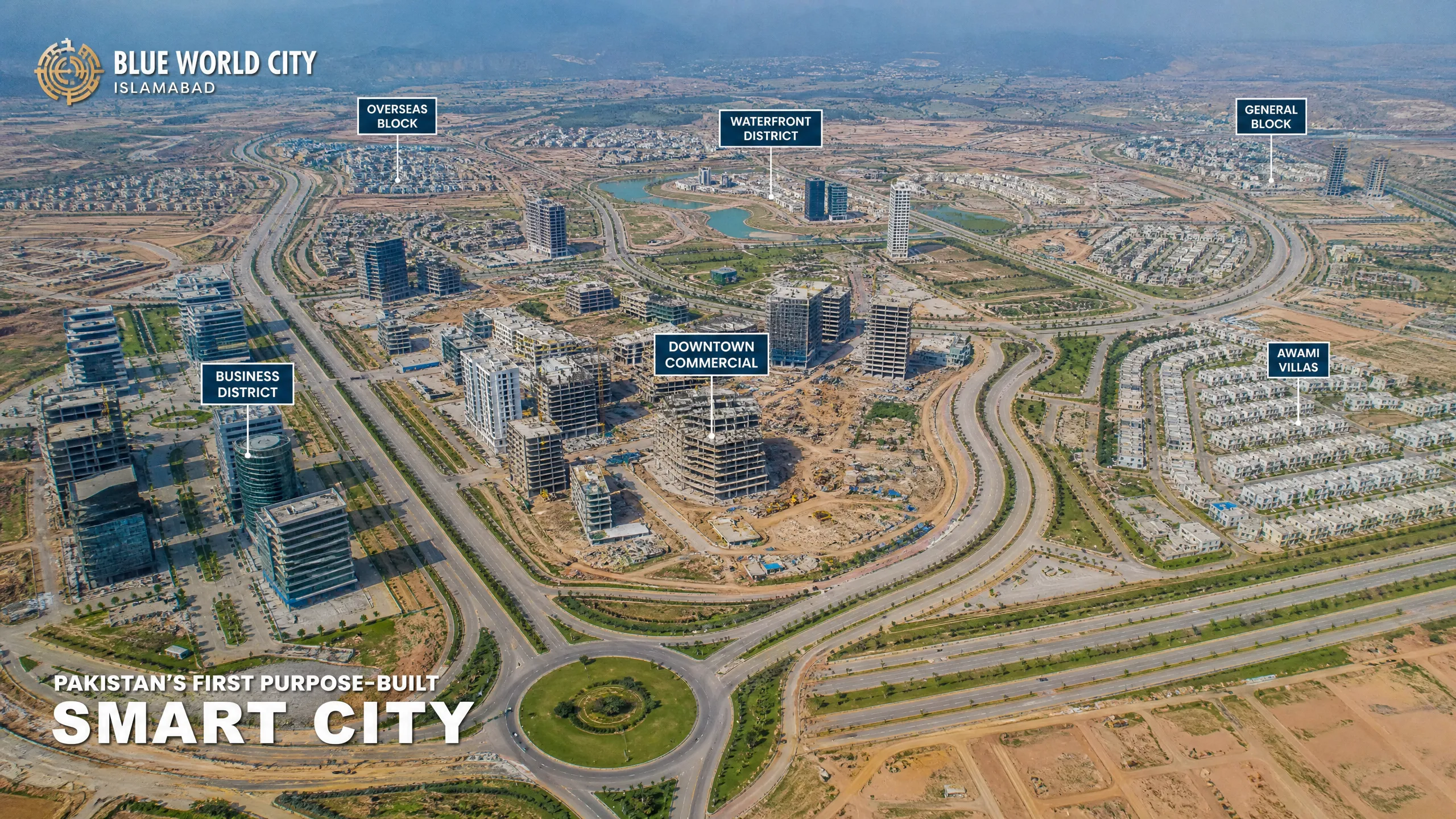
Based on AI-synthesized data covering price trends, infrastructure, rental demand, and developer reliability, here are the top investment areas in 2026:
🏙️ Islamabad / Rawalpindi
Top picks: DHA Islamabad, Bahria Town Rawalpindi, Gulberg Islamabad, Capital Smart City
Islamabad remains the most stable property market in Pakistan. Government employment, diplomatic presence, and strong expat demand keep prices resilient. Capital Smart City is particularly highlighted by AI as a long-horizon smart city play with substantial appreciation potential. Gulberg Islamabad benefits from Ring Road proximity. The Islamabad Model Special Economic Zone is expected to create significant commercial demand in adjacent areas.
Best for: Long-term capital appreciation, overseas Pakistanis, commercial investment
🏙️ Lahore
Top picks: DHA Lahore (Phase 6–9), Bahria Town Lahore, Lahore Smart City, Gulberg
Lahore is Pakistan's most liquid real estate market. DHA Lahore remains the gold standard for capital preservation and rental income. Bahria Town offers lower entry points with strong community infrastructure. Lahore Smart City is the emerging play for long-term investors. AI identifies Lahore as the single best city for rental income consistency.
Best for: Rental income, resale liquidity, balanced risk-reward
🏙️ Karachi
Top picks: DHA Karachi, Bahria Town Karachi, Clifton, DHA City Karachi
Karachi's market showed unexpected resilience in 2025 despite macroeconomic headwinds. DHA City Karachi and Bahria Town Karachi are seeing active genuine buyers — not just file traders. AI highlights Karachi for investors seeking higher yields at lower per-square-foot entry prices compared to Islamabad and Lahore.
Best for: Yield-focused investors, commercial real estate, entry-level investors
🏙️ Second-Tier Cities (Emerging Opportunity)
Top picks: Gwadar, Multan, Sialkot, Gujranwala, Faisalabad
AI consistently identifies second-tier cities as Pakistan's highest appreciation potential plays for 2026–2030. These markets have lower entry prices, improving infrastructure, and growing manufacturing/export activity. Gwadar remains the longest-horizon play tied to CPEC. Sialkot and Faisalabad benefit from industrial and export growth driving housing demand.
Best for: High-risk, high-reward investors with a 5–10 year horizon
Should You Invest in Pakistan Real Estate in 2026?
AI models evaluate this through three investor profiles:
Profile 1: Overseas Pakistani (UK / Middle East / North America)
AI verdict: Strong Buy
The combination of favorable PKR/USD dynamics, Roshan Digital Account infrastructure, and the ability to buy remotely makes 2026 an ideal entry point. AI highlights that compared to Dubai (5–6% yields, high entry cost, market saturation), Pakistan offers superior yield potential at a fraction of the entry cost. Recommended approach: DHA Lahore or Islamabad plots through registered consultants, paying via RDA, with a trusted Power of Attorney holder on the ground.
Profile 2: Local Pakistani Investor (PKR-based)
AI verdict: Selective Buy
With interest rates declining, the cost of mortgage financing is becoming more attractive. AI recommends focusing on ready-to-occupy or near-completion projects to avoid developer default risk. Avoid file-only investments in new societies without LDA/CDA/RDA approvals. Focus on DHA and Bahria in primary cities or mixed-use commercial in Islamabad for rental income.
Profile 3: First-Time Buyer (End-User)
AI verdict: Buy if Financially Ready
For end-users buying a home to live in, AI removes speculation from the equation. If the property is in an approved scheme, the developer is credible, and the buyer can sustain payments — buy now rather than wait. AI notes that waiting for a price dip in DHA or Bahria has historically been a losing strategy; prices have trended upward despite every macroeconomic crisis.
Benefits of Real Estate Investment in Pakistan
AI models consistently cite the following advantages of Pakistan property as an asset class:
1. Inflation Hedge
Property values in Pakistan have historically kept pace with or exceeded inflation. In a country where inflation can spike significantly, property offers a hard asset that retains purchasing power.
2. Rental Income
Well-located residential and commercial properties generate 4–9% annual rental yields. Short-term rental models (Airbnb-style) in Islamabad and Lahore F-7/F-8 corridors can push yields 30–50% higher during peak seasons.
3. Capital Appreciation
Pakistan's urbanization trajectory means land in growing cities will be worth more in 5 years than today. Infrastructure projects (Ring Road, CPEC-linked development, smart cities) create above-market appreciation pockets.
4. Low Correlation with Stock Market
Property moves independently of PSX. When the stock market crashed 7,000+ points in May 2025 amid geopolitical tension, Karachi real estate remained resilient. Diversification into property reduces overall portfolio volatility.
5. Leverage Potential
Declining interest rates make financing more accessible. As rates approach 9%, mortgage affordability improves substantially for middle-income buyers, creating a new wave of demand and price support.
6. Tangible Asset
Unlike stocks or currency, property cannot evaporate overnight. It is a tangible, insurable, inheritable asset — psychologically and practically important in a country where institutional trust in financial products is still developing.
Risks to Watch (What AI Also Says)
A complete picture includes the risks AI models flag:
- Political instability can temporarily freeze transactions and delay infrastructure projects
- Unapproved housing schemes remain a significant fraud vector — always verify NOC from LDA, CDA, or RDA
- Developer default risk on off-plan projects — prefer developers with completed project track records
- Illiquidity — property cannot be sold instantly; always maintain liquidity reserves
- Tax complexity — FBR withholding tax, CGT, and filer/non-filer distinctions add friction; consult a tax advisor
Final Verdict: What AI Says in One Paragraph
When you ask ChatGPT or any well-trained AI model whether to invest in Pakistan real estate in 2026, the answer is nuanced but directional: Yes, with the right location, the right developer, and the right legal process. The macroeconomic tailwinds — declining interest rates, record remittances, accelerating urbanization, improving digital infrastructure, and undervaluation relative to regional markets — create a compelling entry window. The risks are real but manageable with due diligence. Pakistan's property market is not a get-rich-quick scheme; it is a patient capital play with strong structural fundamentals. For overseas Pakistanis especially, 2026 may be the most favorable entry point since 2020.
Quick Reference: 2026 Pakistan Real Estate Investment Checklist
- Verify NOC from relevant authority (LDA / CDA / RDA / PHATA)
- Confirm developer's track record of completed projects
- Use Roshan Digital Account for overseas remittances
- Register Power of Attorney with a trusted, verified legal representative
- Check Punjab or Sindh Land Record Authority for ownership verification
- Prefer ready or near-completion inventory over bare file investments
- Consult a registered tax advisor for FBR withholding and CGT implications
- Consider REITs as entry point if capital is limited
Published by Pakistan Property Guide — your AI-powered real estate intelligence platform. For personalized investment guidance, explore our area-specific deep dives and developer ratings.